CHROMESTHETICS & LYRICISM
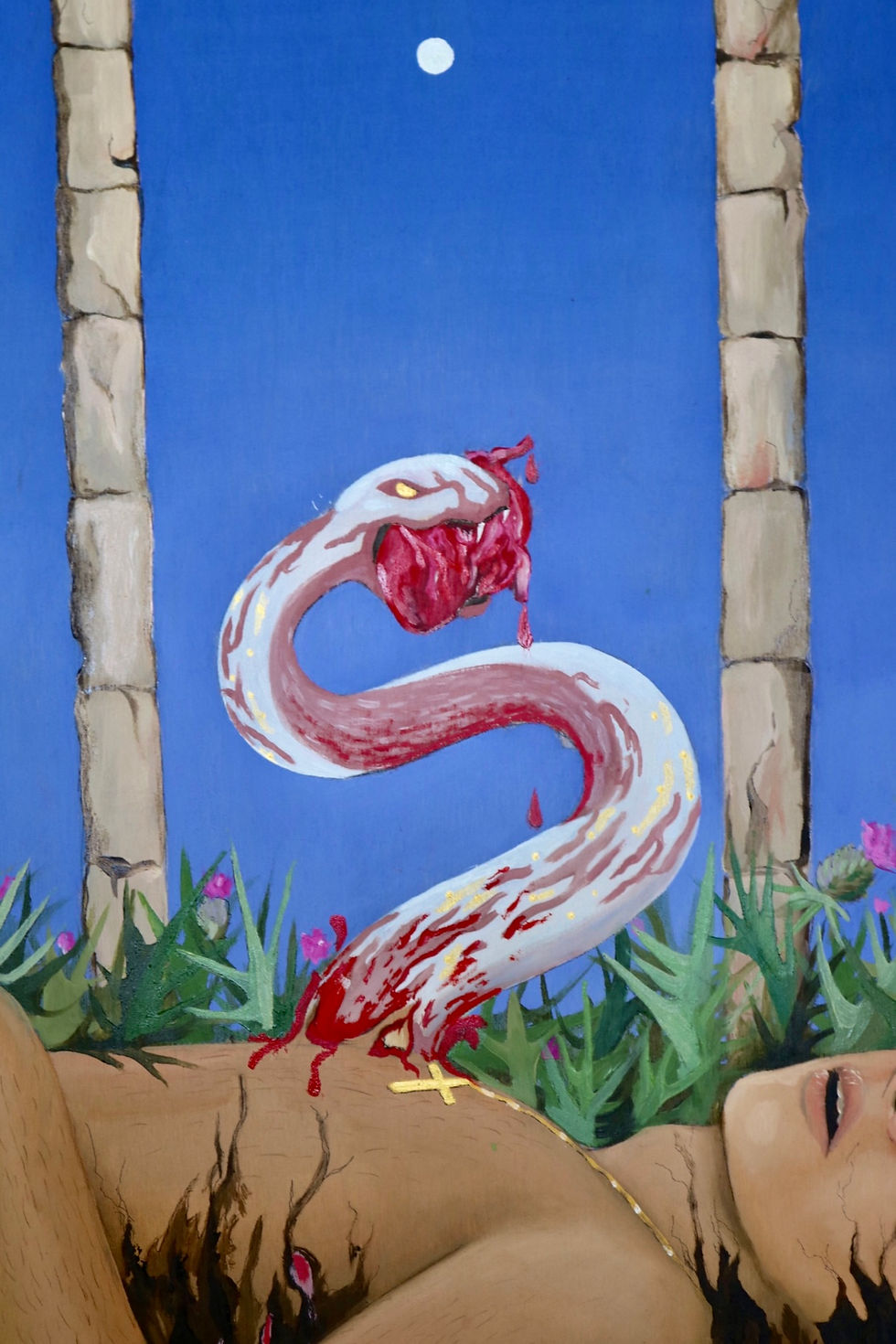
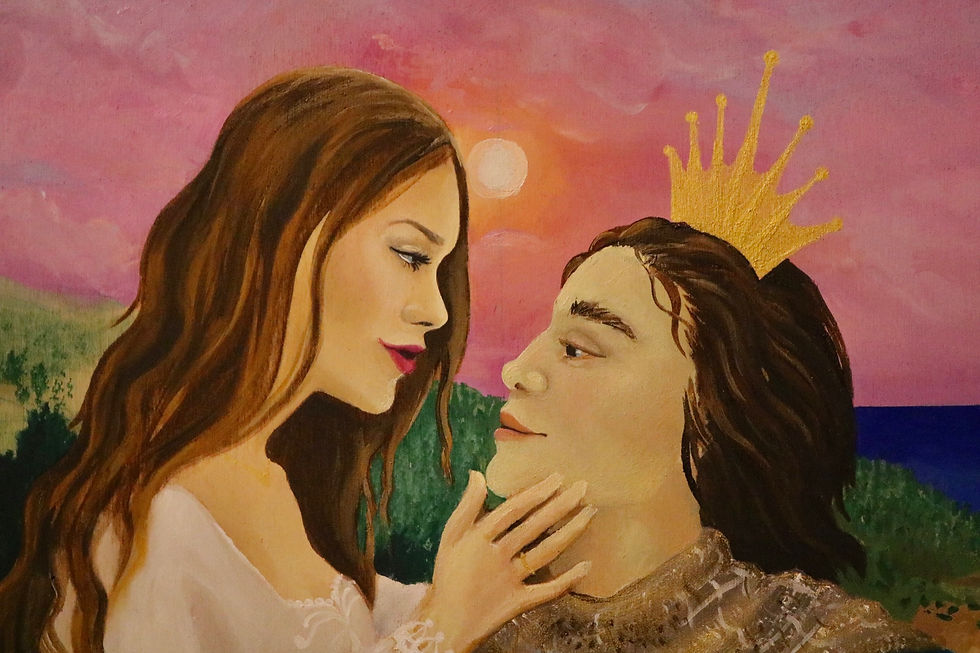
Created in honor of the Scottish singer-songwriter Pim Stones, this concentration of four pairs of paintings depict the Chromesthetics and Lyricism of four songs:
The Life We Could Have Had, Neon Lights, The Last One I Made, and We Have It All.
The "Chromesthetic" painting is meant to be viewed while listening to the song. Please see the interactive gallery below.
THE LIFE WE COULD HAVE HAD


NEON LIGHTS
.jpg)

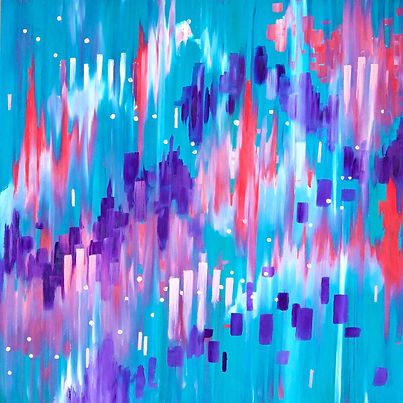
THE LAST ONE I MADE
.jpg)

WE HAVE IT ALL
.jpg)

This project is my attempt to visualize what makes Pim Stones’ songs so special, by painting the lyricism and chromesthetics of four of his six existing songs: “We Have It All,” “The Last One I Made,” “The Life We Could Have Had,” and “Neon Lights.”
The word “synesthesia” comes from the Greek meaning, quite literally, “to perceive or sense together.” Synesthesia, simply stated, is a neural overlap between sensory modalities. For example, some synesthetes (those with such neural overlaps) experience an auditory response to a smell, or associating flavors with numbers. One type of synesthesia is chromesthesia, the perception and association between musical sounds and colors. Until my teenage years, I assumed that everyone experienced music similarly, with this experience of color. Akin to an aura in my minds’ eye, or the light that lingers after a flash-photograph, when I hear certain sounds, especially orchestral music, I experience colors. Making the claim to have never come across a musical artist who is as beautiful as Pim Stones is therefore an all encompassing claim, considering both his beautiful lyrics and voice. This project is an attempt to allow non-synesthetes to “perceive together” the qualities of his music as I do. From the rich symbolism of his lyrics to the visual chromesthetic interpretation, my paintings seek to express the sound of his music in a visual capacity. In order to do this, each song is accompanied by two paintings to experience in tandem: the first, and larger piece, details the meaning of the lyrics; the second, smaller painting, serves as a visual abstract representation of sound-color synesthesia. The first two paintings work in harmony with one another, as do the third and fourth, depicting religious and romantic themes respectively.
The first couple of songs, “The Last One I Made” and “We Have It All,” are studies of the human condition. The former is hopeful in light of revelation while the latter is mourning the impediment of sin and evil. They each feature a single character – the same character, actually – grappling with these moral issues. Using one figure in both of these paintings highlights the duality of moral salvation and damnation while illustrating the role they both play in experiencing the human condition. The second pair of songs, “The Life We Could Have Had,” and “Neon Lights,” depict love and love lost. The former could be about both, arguably, but the latter suggests losing oneself in the quest for romance. Lyrically, all four songs are similarly dramatic, but these last two are story-book romances. Thus, I tried to depict them that way.
The four Lyricism paintings share visual motifs; most apparent is that each has a gold frame, though the shape and size of this border differs. In addition to the gold frames are hints of gold metallic in jewelry, clothes, or the background details. Every painting also includes reference to at least one species of flora. Historically, many famous paintings have included symbols important to understanding the meaning behind the subject. Some plants have very specific symbolic attributes, and flowers are well-suited to the themes of these paintings. For this reason, every Lyrical piece includes at least one flower, such as wisteria or daffodil. Each painting also includes a gemstone and element of nature. Gemstones, like flowers, have unique symbolism which further imbues meaning related to the songs into the paintings.
Amongst the four Lyrical paintings are the four states of matter regarded in modern science: solid, liquid, gas, and plasma; as well as the four elements regarded as essential to the ancient world: fire, earth, air, and water. The visual motifs serve several purposes: firstly, they provide uniformity and cohesion as they are displayed together. Secondly, the motifs symbolize
several of the shared sounds and compositional musical decisions utilized to tell a beautiful story conjunctive with one another.
This project is well-timed as in the midst of my research, Pim Stones broke his silence after six years to the day since his last post on social media. His announcement? “I am indeed alive and well… I’m making music again. A little patience, though, por favor. You've waited this long so what's a little longer, eh?”
For individual analyses see my Pim Stone Blog series.